
How to Determine if a Tree Needs Removed vs. Maintenance?
A damaged tree doesn’t always need to come down. Sometimes it just needs maintenance to help it recover. In other cases, the tree is too damaged to save. It could fall and injure someone or damage your property.
So, the question of the day is: How can homeowners determine if a tree needs to be removed? Unfortunately, there isn’t a simple answer. It depends on the tree, the type of damage, and the risks associated with the tree falling.
In this blog, we’ll give you some insights on when maintenance might be enough vs. when removal is the better option.
Start By Assessing Overall Tree Health
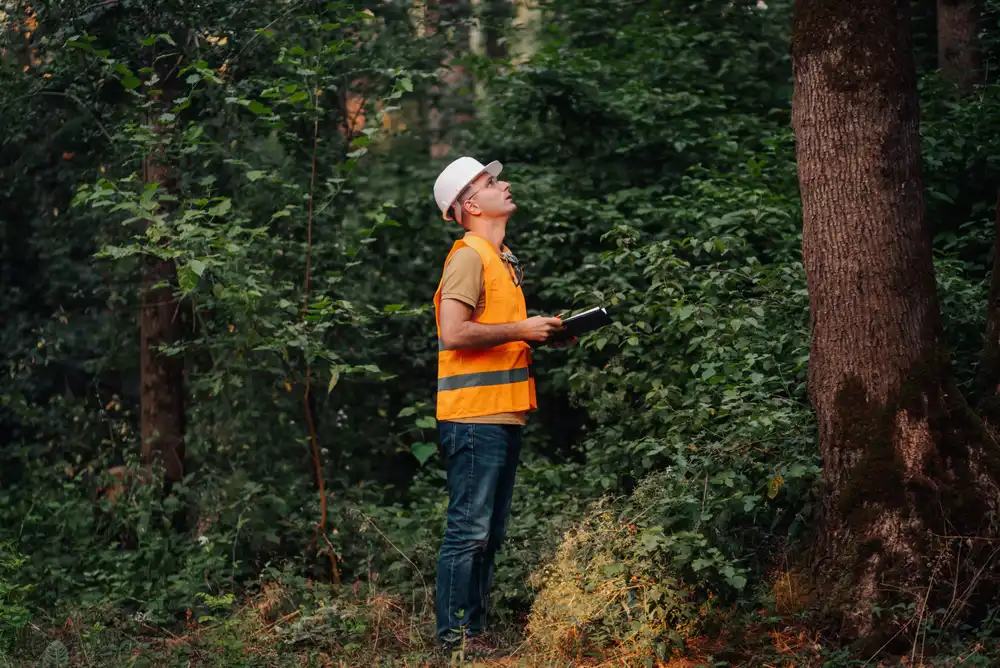
Before focusing on one crack or dead limb, step back and take a look at the whole tree. Look at the canopy, leaves, branches, trunk, and base. Is most of the canopy still alive and producing new leaves and twigs? Has anything changed suddenly?
A few visible problems don’t mean the whole tree is dying. A tree can have a damaged limb while the rest of its structure is still strong and healthy. These are some of the signs that your tree is in reasonably good condition:
- Most of the canopy has healthy leaves
- Plenty of new buds and twigs in the spring
- The bark feels firm
- The trunk looks stable
- The roots haven’t been disturbed
- The tree hasn’t started leaning suddenly
Keep the tree’s age and species in mind when assessing its tree health. Some trees naturally have open canopies and uneven branches. Some species, like paper birch, even have naturally peeling bark.
The main thing to look out for is sudden changes. Sudden changes are usually more serious than a condition that has stayed the same for years. Schedule a tree inspection if your tree suddenly loses a lot of leaves or starts leaning.
Signs Your Tree is Diseased & Might Need to Be Removed
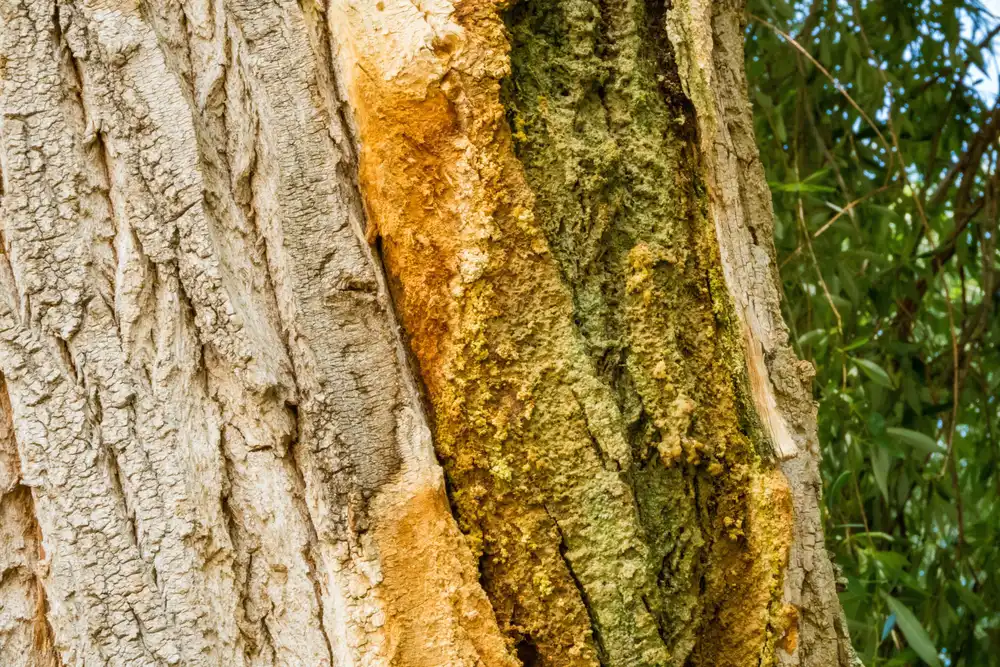
Don’t panic if your tree loses a few more leaves than normal this year. Heat, drought, insects, and bad soil conditions can all thin your trees’ leaves in the short term. However, contact us if the thinning is widespread and continues to get worse every season. Here are some more symptoms to look out for:
- Little or no new leaves growing
- Brittle twigs
- Lots of missing bark
- Lots of canopy dieback
- Spreading cankers
- Repeated early leaf loss
- Unusual discolorations
- Fungal growth on the base or trunk
- Lots of dead branches
If your tree only has a few dead limbs, it might just need trimming. But if half the canopy is dead and it’s only getting worse, removal might be the safer choice. Some diseased trees can be managed. But if the disease has spread to the trunk, roots, and vascular system, sometimes it’s irreversible.
We don’t recommend having a tree removed based on leaf color or overall appearance alone. Contact Joseph Tree to schedule an inspection today, and we’ll help you determine whether the disease is treatable or not.
Look for a Split or Hollow Trunk
Don’t underestimate small cavities in your tree’s trunk. A small opening can hide more extensive internal decay. If the tree is rotted through a large part of its trunk, the rest of the wood might not be strong enough to support the canopy. Keep an eye out for:
- Soft and crumbling wood
- Open seams between trunk sections
- Mushrooms growing out of the trunk
- Water collecting inside a cavity
- Multiple trunks pulling apart
A hollow trunk can be hard to investigate from the ground. Contact Joseph Tree to schedule a professional tree inspection today. We can climb your tree to get a better look at cavities. We can also use sounding tools and resistance testing to better understand what’s happening in your tree’s trunk.
Look Out for Sudden Leaning and Root Damage
Not all leaning trees are unsafe, but you should always monitor them. Some trees have grown at an angle for decades because they were reaching toward sunlight or adapting to nearby structures. But sudden leaning and root damage are always red flags. Contact a certified arborist if you notice:
- Sudden leaning after a storm
- Soil lifting around the base of your tree
- New cracks in the ground
- Torn or exposed roots
Root damage from construction projects is very common. Excavations, trenching, grading, driveway work, and all that heavy equipment can cut roots and compact the soil around them. Contact Joseph Tree today if you suspect your tree’s roots have been damaged. Our tree services include root pruning, soil treatments, and soil aeration.
Think About What Could Happen if the Tree Falls
When deciding whether to save or remove a tree, you should always do a tree risk assessment. What could the tree fall on? There isn’t much risk if it’s in an open field. But structural instability is a much bigger issue if the tree is near your house, driveway, sidewalk, or playground. You should also consider the size of the tree. If there’s a small dead limb over an empty part of your yard, that isn’t a big risk. But a large branch over your house or driveway is a much bigger deal.
Find Out Whether You Need a Removal Permit
Always check your local rules before scheduling a tree to be cut down. Some cities, townships, counties, and HOAs require you to have a tree removal permit. There might be rules related to your tree’s size, species, location, and historical importance. Dead or dangerous trees are sometimes exempt, but you might need to submit photos and an inspection report from an arborist.
Contact Joseph Tree Today
Tree Services by Certified Arborists in Columbus Ohio
Do you have a sick or damaged tree on your property in the Columbus Ohio area? Contact Joseph Tree to schedule a professional assessment today. Our team of certified arborists will visit your property, examine your trees, and recommend maintenance or removal.